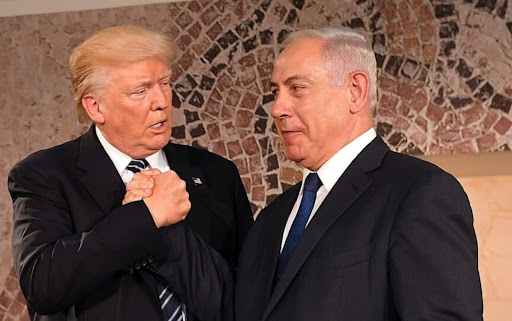
A military campaign is most effective when all parties are working toward the same defined objective. The US-Israel war against Iran is impressive in many respects — but it suffers from a fundamental flaw: the two partners do not share the same definition of success. US President Donald Trump wants to prevent a nuclear-armed Iran. Israeli Prime Minister Benjamin Netanyahu wants to transform the Middle East. These goals are related but not identical, and the gap between them is generating friction at every level of the campaign.
The South Pars gas field strike was the most visible expression of that flaw so far. Israel struck a target that served its broader destabilization agenda — not the nuclear-focused American strategy. Trump said he had warned against it. Iran retaliated broadly. Gulf states raised alarms. US officials worked to contain the damage. The episode followed a pattern that is becoming familiar: Israel escalates, America pushes back, both sides issue reassurances, and the underlying disagreement remains unresolved.
Director of National Intelligence Tulsi Gabbard provided official confirmation of the divergence in congressional testimony, telling lawmakers that the objectives outlined by Trump and Netanyahu are different. That confirmation, from a senior intelligence official, gave the divergence a status that official alliance messaging had tried to avoid. It could not be dismissed as outside analysis or opposition spin — it was the US government acknowledging its own alliance’s internal tension.
Trump has tried to narrow the gap by retreating from regime-change rhetoric and defining success more narrowly as nuclear prevention. Netanyahu has moved in the opposite direction, maintaining a maximalist vision that includes regime transformation and a reordered Middle East. The two trajectories are pulling the alliance in different directions at a moment when coherent strategy is most needed.
The alliance will likely hold together — the two governments have too much invested in each other, and in the conflict’s outcome, to allow it to fracture. But holding together is not the same as working toward a shared objective. Until Trump and Netanyahu can agree on what victory looks like, the campaign will continue to operate with a fundamental flaw at its core — and the South Pars episode will not be the last incident that flaw produces.