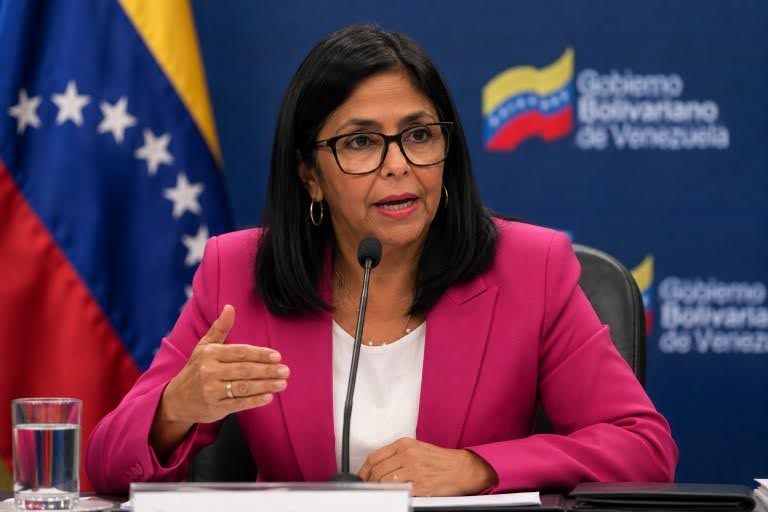
Venezuela’s interim president, Delcy Rodríguez, has publicly defended an energy deal with the United States, emphasizing that the country will maintain control and sovereignty over its vast oil reserves. This comes amidst strong domestic criticism following her ascent to power earlier this year after Nicolás Maduro was ousted through a U.S.-backed operation. In her address to the nation, Rodríguez aimed to dispel accusations of conceding national assets to American interests, highlighting the extensive economic benefits she believes the agreement could bring.
Rodríguez outlined that the deal, which was negotiated covertly over several months, could potentially yield over $209 billion in revenue and position Venezuela as a significant energy player on the global stage. She argued that the country’s immense oil reserves, which are the largest in the world, would remain untapped without essential investments in technology and infrastructure necessary to convert these resources into economic prosperity for the Venezuelan people. The agreement reportedly grants the U.S. substantial control over 17 strategic oilfields, with an ambitious production goal of over 1.5 million barrels per day.
The announcement has ignited a wave of criticism from both political opponents and members within Rodríguez’s own party. Detractors have labeled the arrangement a seizure of national resources, with a former state oil executive branding it as a betrayal of Venezuela’s sovereignty. The deal has sparked protests in Caracas, where demonstrators condemned what they view as foreign interference, while social media users satirized the agreement by suggesting a rebranding of the national oil company.
This move represents a stark shift for Rodríguez and her political allies, who have traditionally opposed foreign control over Venezuela’s natural resources. Rodríguez herself has previously spoken out against such arrangements, making the current deal a significant departure from her earlier stance. Additionally, opposition leaders have voiced concerns that the agreement might hamper efforts to reestablish democratic elections in Venezuela, stressing that sustainable economic growth hinges on transparent governance and free electoral processes.