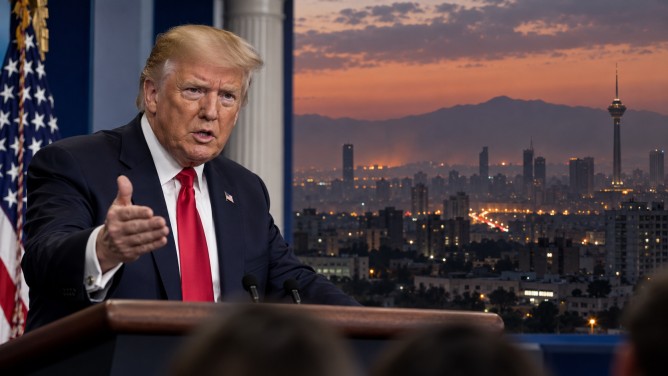
U.S. President Donald Trump has signaled the potential for an intensified military response against Iran, emphasizing that the United States will not permit Iran to develop nuclear weapons. Speaking to reporters, Trump noted that the U.S. had already significantly weakened Iran’s military capabilities, yet did not rule out further actions. He expressed optimism that the conflict would conclude soon, which he believes would lead to a decrease in oil and gasoline prices.
The conflict, which erupted in late February, has escalated tensions across West Asia, particularly affecting maritime traffic through the Strait of Hormuz, a vital conduit for global oil and gas shipments. Attacks targeting shipping and energy infrastructure have heightened concerns over regional security and international energy supplies.
In response to potential renewed strikes by the U.S. and Israel, Iran has threatened to expand its retaliatory measures. Iranian officials have warned that they could target American military bases, airports, and civilian infrastructure in neighboring countries if the conflict resumes. This warning follows earlier phases of the conflict where Iranian strikes reportedly damaged U.S. military and diplomatic sites in Bahrain, as well as affecting energy and industrial facilities in the United Arab Emirates and Qatar, and airports in Dubai, Kuwait, and Bahrain.
Iranian Foreign Minister Abbas Araghchi has cautioned that further military action would endanger civilian lives, regional stability, and the global economy. Military assessments indicate that Iran retains a substantial ballistic missile capability, and there is ongoing speculation that it might be attempting to recuperate some production using existing components and underground facilities.
Meanwhile, the United States, Israel, and regional partners are experiencing pressure on their supplies of air-defense interceptors amidst these continuing security challenges. Diplomatic efforts aimed at resolving the conflict remain stalled, and the ongoing disruption around the Strait of Hormuz continues to pose a threat to global energy markets and commercial shipping.
The warnings from both Trump and Iran reflect the uncertainty surrounding the next phase of the conflict, with potential ramifications for regional security, civilian infrastructure, and international oil prices. As the situation develops, regional governments remain on high alert, grappling with existing security threats and the prospect of further disruptions to critical infrastructure.