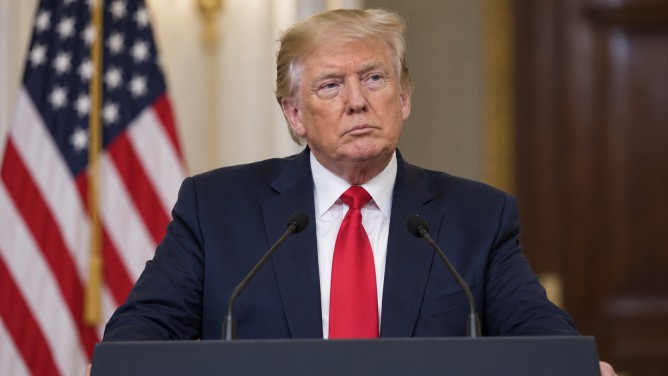
U.S. President Donald Trump stated that the death of a Russian laboratory worker does not seem to be associated with a biological weapon, amidst concerns over a possible pneumonic plague case. The 28-year-old woman, who was employed at an anti-plague research institute, died after developing pneumonia from an undetermined cause. The limited information provided by Russian authorities has led the United States, the European Union, and the World Health Organization (WHO) to seek more details.
While President Trump expressed doubt about the involvement of a bioweapon, he emphasized the need for further information. Russian authorities have assured that the situation is under control and there is no risk of an epidemic affecting the general population. They have reported that no recent cases of plague have been recorded in the region and that individuals who had contact with the woman have been cleared.
The WHO has not yet determined the cause of the woman’s death. Initial reports raised concerns about pneumonic plague, a severe form of pneumonia that can be transmitted between people but is treatable when detected early. Despite these concerns, Russian health officials have rejected suggestions of a broader outbreak risk.
The WHO continues to request additional information from Russian authorities as uncertainty persists regarding the cause of the woman’s illness and subsequent death. The international community remains attentive to the developments, seeking assurances that the health risk is contained.